Showing posts with label Campaign Setting. Show all posts

Thursday, June 2, 2016

New RPG Players

New Players in Games Today

Living in a Golden Age?

It seems like since I heard about David Ewalt’s Of Dice & Men, I—and everyone else—decided it was time to pick our dice back up and start rolling again.  I stopped playing when 2nd Edition was a big thing (the Dragon magazine 5 CD compilation was my last major purchase—and one I’m thrilled I held on to, if only out of chance).

Lately, it seems like everywhere I turn, there’s another article about how roleplaying games are becoming all the rage again.  The most recent was published in today’s Washington Post as a short comic (guessing online only!).  Some of the reasons listed are that the stigma’s been lifted, people never really knew what roleplaying games were before, among other things.
Although none of the major producers I know of release detailed sales figures, anecdotal sources tell us that the state of the hobby is strong.  ICv2’s most recent Internal Correspondence estimates that games sales are up 20% overall.  Internal Correspondence notes that RPG sales as a whole are increasing, led (unsurprisingly) by 5th Edition, with Pathfinder sales flat or declining—at least in retail stores. 
And yet, something must be going right for the kids over at Paizo.  Even if the industry insider is telling tales of their woes, Paizo’s gone and broken three of their oldest taboos.  First, they’ve consistently said no new edition for Pathfinder, at least not anytime soon.  Second, they’ve repeatedly resisted advancing their timeline, something popular with RPGs in both the domestic and international markets.  Finally, citing concerns that it was the creation of too many campaign settings that ultimately sunk TSR into Wizards of the Coast’s arms, they’ve refused to publish anything but their Golarion products—in house at least.  Instead, they’ve squared the circle, developing a new game mixing magic and technology and adding in a little interstellar travel.  Before this post devolves into a post on the merits of Starfinder (future topic!), I’ll leave it to say that Lisa Stevens at Paizo strikes me as a shrewd businesswoman.  If she didn’t believe there was space (double enténdres?) in the industry for a successful new product, it would not be happening.
Finally, we’ve seen a bevy of other games and game companies sprout up over the last few years.  This includes Monte Cook Games with their Numenera, the Strange, and Cypher System games; Fire Opal Media’s partnership with Pelgrane Press to publish 13th Age; Robert Schwalb’s Shadow of the Demon Lord (with a number of support products that are, frankly, mind boggling for a product with less than one year on the market); Green Ronin’s Fantasy AGE; and a new edition of Shadowrun, just to name a few.

What Does This Have to Do With New Players?

New players are how we keep growing our hobby!  And, because I need to write a blog post.  Because I want to see the less-well supported products succeed, I like to run 13th Age games at GenCon and other local cons I attend.  So, before GenCon 2015, I invited some friends over to my house for a little roleplaying session.  I planned on using four hours to run the first two-hour scenario in the Shadowport Shuffle series: Deep in the Red.  I felt like Deep in the Red would be a strong scenario because it offered a lot of roleplaying opportunities.  I provided pre-gen characters, but wanted to give people wholly ignorant of game mechanics quite some time to learn them.
I ended up with 7 players, only one of which had experience playing any RPG.  6 were heterosexual women, one was a bisexual woman, and 1 was a homosexual male.  That’s right our table had no heterosexual males (not that there’s anything wrong with playing with heterosexual males, but our group was NOT the norm)!  Here’s a quick rundown, all working professionals in the Washington, DC area:
·      Attorney for a large corporate firm
·      Property manager for an apartment building with 100+ units
·      Congressman’s scheduler
·      Charter school principal
·      Special events director of a museum
·      Office manager for a judicial advocacy organization
·      Partner of a real estate management and sales firm
One look at this list does not scream: members of the creative class!  There were no writers, no artists, no singers or songwriters, no architects, etc.  All in all, I was actually excited about this.  Of course, there were no engineers either, so we were killing the stereotypes on multiple fronts. 

What Actually Happened?

[MINOR SPOILERS FOR THE 13TH AGE SCENARIO “SHADOWPORT SHUFFLE” FOLLOW]
We sat down and everyone but me opened their first drinks (did I mention this was a heavy drinking group?).  I gave a quick runthrough of the system’s rules: covering ability scores, races, classes, using d20 and other weird dice, and other information on their character sheets.  Then, we talked about backgrounds and how they interact with skill checks.  We talked one unique things and icon relationships.  Finally, we jumped into play.  Here are my quick takeaways:

Roleplay Attracts No Specific Type of Person

When I’d first put out the call for GenCon guinea pigs players, the call was wide and to a large group of people (about 25), because I thought that no one would be interested.  I found that quite a lot of people were.  Some were curious because they’d never heard of them.  Others were curious because they’d heard of them, but didn’t know what they were.  A surprising number did know what they were, and had played before. 
Three of my players are from another group that frequently discusses attempting to organize a book club dedicated to cheap wine and trashy, smutty fantasy novels.  I was not surprised when they signed up.  However, I was surprised that one of them was not a fan of the RPG experience.  Another participant, who was a last minute, day of, addition, has been hassling me to organize another home game.  (Don’t worry, law school’s over!  It’s happening!) 
Fortunately, at least one of them had some rpg experience.  This was useful from a numbers management perspective.  Having two people to help six new people wasn’t an optimal ratio, but we’ll discuss that later in the post.

Roleplay Can Be Intimidating for Newcomers

One of my players had initially emailed me saying that she’d love to help out a friend, but she just didn’t feel like she was creative enough to participate in something like an afternoon of roleplay.  I assured her that she was and that if she was uncomfortable, she should by no means feel required to do anything that would upset her.  I was thrilled when she showed up that day though.
This is an area where system choices can have a real effect on new players’ experiences.  Two of 13th Age system tools quickly came into play here.  First, its montage scene feature is a system-neutral tool (it’s not even mentioned in the Core book, just in the adventures and later products) that’s useful for helping players get into their characters. 
·      GM (to Player 1): It took you two weeks to make the journey from Alepha to Betatown.  On the way, there was a great challenge that threatened all of your lives.  What was it?
·      Player 1: A man-hunting bear trained in the art of the shuriken stalked us through the forest of Beasties.
·      GM (nodding): Yes, it was a terrifying time.  But, Jord the Crazed Sword Mute saved all of your skins.  How did he do it?
·      Player 2 (playing Jord): Well, you see, it went something like this…
Montage scenes involve no rolling of dice, merely storytelling.  They are a great way to invest players in the story without needing a single mechanic.  It’s also exteremely useful for helping those players who are concerned that they’re “not creative enough” to get involved.  It’s loads easier to ask a player to give a minor detail (or set up a problem) than it is to say, “You’ve got this sheet full of stats, tell me its story.”
Deep in the Red makes use of this in other ways two.  At one point, the players meet an NPC.  After the GM gives a very brief initial sketch, each player is invited to give a detail about that NPC’s appearance and/or mannerisms (which resulted in my having to act like a physically big man with a small boy’s voice).  That’s a great way to let players develop the world: it takes work of my shoulders while investing them in the experience at the same time.  Sure, it was a pain keeping my voice high and occasionally cracking it, but my players were invested and actively listened to what the NPC had to tell them.
Deep in the Red also assumes that each of the characters owes one of the Icons, major NPC organizations in the game system, a favor.  That Icon is the Prince of Shadows, an archetypical master thief figure.  The scenario begins with the Game Master informing the players of this debt.  Each player then has an opportunity to explain what, exactly they needed and how, exactly, the Prince helped them.  This was very useful for getting players in character.
And that player who thought she wasn’t creative enough?  Well, after the party recovered the MacGuffin they were sent to find, she had a really sneaky idea.  Since the party was working for a master thief, why didn’t they just have a copy of the statue made and sneak off with the real one themselves?  Not to spoil a major reveal at the end of the scenario, but what’s supposed to be a big surprise for the PCs turned into a much bigger surprise for the NPC questgiver.  And the PCs were thrilled to see that happen (not to mention paid double for stealing only once!).

Newer Players Preferred Story over Context

I provided the info map above as a flip map in the center of the table.  My goal was to quickly convey system information (yellow) and setting information (pink) with a visually appealing backdrop.  To some degree, it worked.  To other degrees it didn’t.

What Worked

Pelgrane Press provides a beautiful, hi-res, image file of the map of the Dragon Empire.  Gaming companies put these things out and as a Gamemaster, you should run with them.  Obviously, don’t abuse their intellectual property (most companies detail how you can use these materials for your home games somewhere in their core rulebook or attached to each product).  Remember, many gaming companies are small and thrilled to have you interacting with their materials and the authors themselves will love seeing what you did.  So, get out there and do it.  Focus on what you’re best at, but don’t be afraid to stretch out—graphic design isn’t my field of expertise, but I think I did a pretty good job throwing out a 24x30 inch flip map that got everyone’s attention.
The bare bones information was helpful here.  Being able to point to the gazetteer information on Shadowport (which paraphrases the 13th Age Core entry on the city with a bare-bones explanation) and then tell them, “And that’s ALL anyone…you or I…really knows about it right now,” helped cement the setting’s malleability in their heady.  Similarly, defining the Icons enough to give them flavor but without setting them in stone was helpful.  If I run a similar campaign, I’ll consider using the 7 Icon Campaign aid.  13 Icons are great if you’re a voracious reader or a regular gamer, but if you don’t have a wide breadth of fantasy they can get a little tough.  Additionally, at least for a one shot, I wouldn’t be afraid to cut down on Icons in the future.  I don’t remember if any of my players had a relationship with the High Druid, but I do know it likely didn’t come into play in a highly urban setting (though, who’s to say it couldn’t?).

What Didn’t

A wise man once said that the rent in New York was just “too damn high.”  Mechanics information is just too damned complicated.  I wanted a simple reference guide that my players could refer to while moving through the story.  What I realized is that mechanics information is something that really has to build upon a strong foundation.  Most of the yellow space on my map could easily be replaced with more pink content or (even better), freeing up some of the underlying map to be seen.

Newer Players Preferred Roleplay Over Combat – BUT mechanics matter!

Remember when I said that mechanics needed to be built over time?  I was blown away by this.  In fact, my last blog post of last summer posited that system mastery would be the least important factor for any new player—that was why I chose a rules-light game like 13th Age over something like Pathfinder.  But, without the concepts attached and a strong explanation of those rules, sometimes things felt a little bit arbitrary.
This was especially true in combat situations.  My characters did not like combat.  But, they loved skills challenges.  They even loved how ridiculous situations got when they failed forward and more and more off-the-wall ideas were required to get them out of a jam they’d just created.
One player commented that she wished that we’d had more time to go through the character creation process.  This has helped me a lot—I’ve realized that a session 0 and a Microscoping session for worldbuilding are essential for a longer-term campaign.  Similarly, for a one shot (especially one where the play is only supposed to last two hours), offering those who want to make their own characters an opportunity to drop by a couple hours early and do so will only enhance the experience.

Go Forth and Play!

So, those were my lessons:
·      Create situations where your players can ease into roleplay and they won’t even notice how deep they get – cook your players frogs slowly;
·      Make sure you’ve got a story everyone can relate to.  It doesn’t have to be plain vanilla European fantasy (Deep in the Red is a pretty obvious Maltese Falcon knockoff), but it does need to be relateable; and
·      Ensure that players get a good grasp of the underlying mechanics and they’ll come up with ways to employ them destined to drive you crazy.
Good gaming!


Friday, June 19, 2015

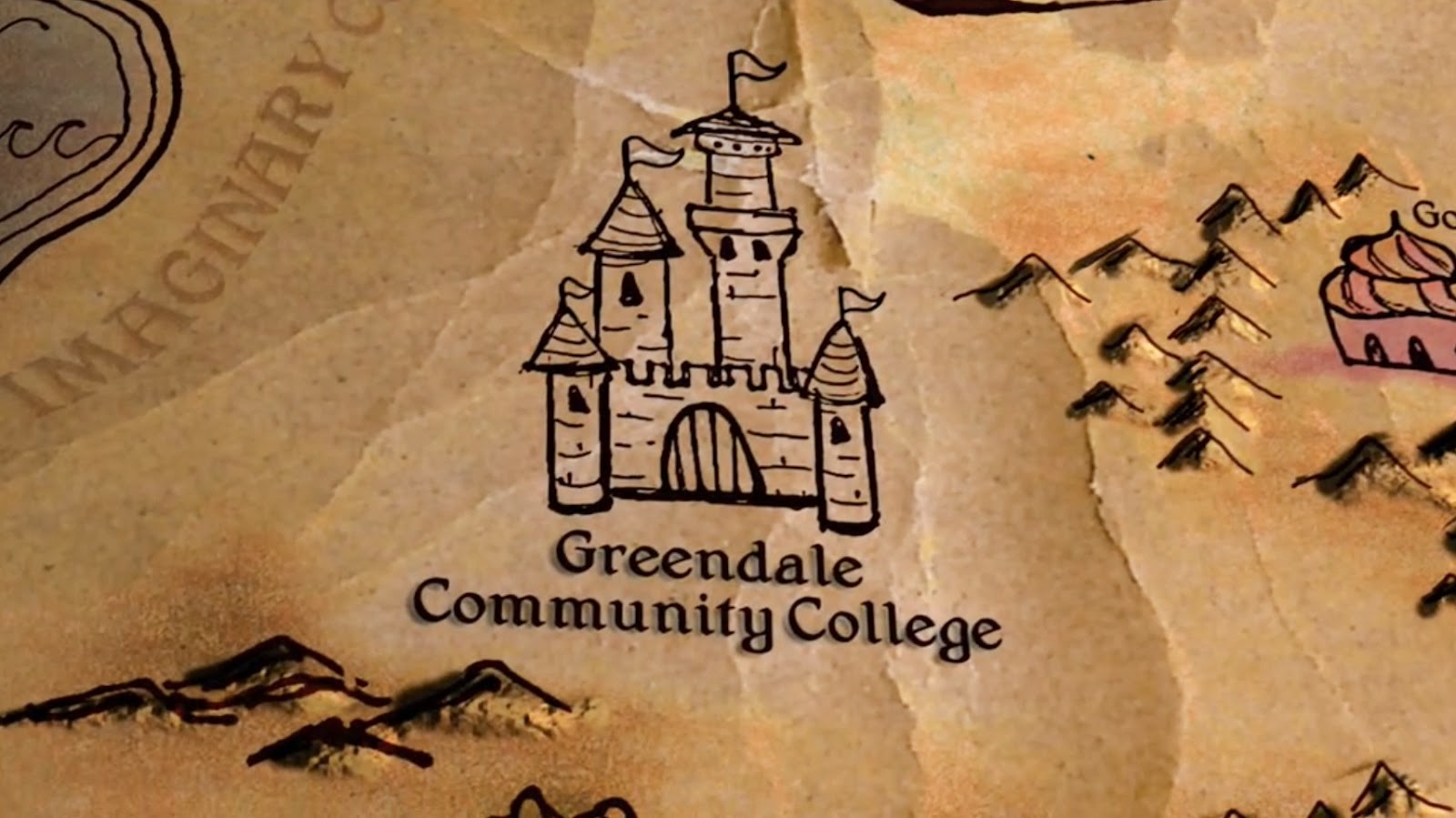
Gayming in Greendale -- Community Campaigning


So, I play RPGs.  But, my roommate doesn't.  Once, when my college roommate was visiting, we got her to play a game of Fiasco.  She was fantastic, taking on the role of a Swedish research scientist at an Antarctic research station.  But, from time to time, she'll ask about something in an RPG even if she's not interested in playing.

Lately, we've watched a lot of Community together.  There are two fantastic episodes of Community (called "Advanced Dungeons & Dragons" and "Advanced Advanced Dungeons & Dragons") where the gang actually plays an RPG.  On the show they claim it's D&D, but it's a highly modified version more suitable to TV.  The theory behind it isn't changed, it's just that the DM does all of the rolling.  I can get behind the idea of having the players do all the rolling (thank you Monte Cook Games and the Cypher System!), but making the GM do it is just one more burden when your GM could be doing something to make the game more interesting.

But, I'm digressing.  This weekend, I hit on an idea to introduce my sweet roommate to the RPG world.  I built a fantasy world based on the tropes in Community.  This is not the world that Abed creates for his games in the show.  Rather, this is a game that utilizes the tropes from Community to build something totally new (or, as we'd say in the world of copyright, an unauthorized derivative work).

One of the most difficult parts about campaign settings is getting into them.  If it's homebrewed, the GM knows everything and the players have no frame of reference and that's a lot to learn.  Ditto for other campaign settings.  I love Paizo's Golarion setting and dutifully subscribe to the Campaign Setting line as well as devouring gazetteer articles in Adventure Paths.  Most people don't.  Golarion is a tough setting to get into.  Ditto the Forgotten Realms, Dragonlance, Greyhawk, the 9th World, and any other setting you can think of.

Shadowrun might be able to overcome this problem since it's setting is based on the modern world.  Unfortunately, Shadowrun's gameplay is so totally opaque that I have no way to evaluate this statement.  In fact, I'm attending a two-hour GenCon session that's just about creating Shadowrun characters.  There's no adventure--just character creation.  Maybe.  Just maybe, after I get back I will have an idea about how Shadowrun is supposed to go down.

So, a campaign setting is probably best if it's accessible.  One way to do this is to create it from the ground up.  The GM doesn't know anything more about the setting than the players do because the GM hasn't invented anything yet.  Have a player that wants to be a cleric?  Okay, pick a couple of domains and tell me about the god(dess) you worship.  Is there a cobbler in town?  Hmm...okay, sure.  Her name is Shawna Tumbletights and she's an ancient gnome who's warding off the Bleaching by investigating all forms of footwear.  She'll provide you a discount on a pair of shoes created custom for your feet if she can investigate your strange bunion...

But, worlds built from the ground up fall easily to internal discontinuity.  What if you need the Vermin domain to be the sole province of the evil insect god and your player already picked it as part of her worship of the goddess of music, who happens to be incarnate as a giant cricket?  Well, you either have to take something away from the PC (never a good idea) or be SOL.

I won't dwell on the problems of playing in a setting familiar to just about everyone, like Middle Earth because we've all hung out with that one guy that can recite the entire Silmarillion.  So, back to Community.  This seems like a great compromise.  My roommate's already familiar with the show's tropes, so it's accessible to her.  There will be some changes, of course, but she should get the general concepts.  Greendale is a good place.  The Pala-Dean is a good guy.  The Greendale Seven are good guys.  Commander Chang is a bad guy.  Etc.  Etc.

I shared the one-page Google doc with her last night.  Thus far the only comment is that the Pala-Dean sounds a little bit like Paula Dean--which only goes to show you why accepting feedback is important.  Anyway, I thought it would be fun to share the one-pager with y'all as well.  Since my family is visiting this weekend, I'll plan on posting the stats for a few of the characters, including Dingleberry the Troll(kin) on Monday.

Harken close to hear the tale of Greendale...

latestOnce upon a time, in the Aumverg region of the Idlemann River Basin, the bucolic Kingdom of Greendale flourished under the rule of King Greendale, the Human Being.  The king was advised by Baron Carl Bladt of Rusty Bucket Manor; Duke Richie Countee, an overweight alcoholic who believed he could read others’ minds; and Benjamin Chang, known today as the Betrayer.  After consultation with his council, King Greendale directed the Pala-dean, a holy warrior dedicated to love, education, and fabulous costumes; to enact his will.  The Pala-dean was assisted by great champions, known collectively as the Greendale Seven.

But all was not well in the kingdom.  Chang played to the fears of the little people within the kingdom; the dwarves, the halflings, and--especially--the gnomes.  In secret he recruited them to his cause.  Chang made common cause with a band of wizards that operated a bakery.  The wizards wanted to corner Greendale’s grain market.  The wizards carved secret passages beneath the city of Greendale.  When the time came to strike, his Changlorious Bastards attacked through these tunnels, known as the Subway.  

Chang coopted Baron Bladt and Duke Countee.  They sent the Pala-Dean to challenge the dread dragon, Draconis.  With the Pala-Dean distracted, there was no one to protect the king when Chang struck.  By the time the Pala-Dean realized Chang’s plan, the deed was done.  The Pala-Dean returned to Greendale, making haste to the castle.  Fighting through Chang’s midgets, the Pala-Dean entered the inner keep.  He exited an hour later, spurring his horse to the east.  None have seen him since.

The Greendale Seven attempted to free the king, but were repelled by Chang’s men.  Early on, Chang was successful in framing them for the coup.  By the time the truth came to light, the Greendale Seven were scattered and unable to form effective resistance.  Shirley the Cloying, ever an enemy to the wizard bakers, fled south to New Fluffytown.  Troy the Obtuse and Abed the Undiagnosable vanished.  Only Britta the Needlessy Defiant attempted to organize resistance, but none rallied to her cause.

Today Chang imposes arbitrary law and rules with an iron fist.  Chang keeps Baron Bladt and Duke Countee loyal by plying them with alcohol and women.  Anyone who speaks out against Chang is jailed as are any even suspected of defying Commander Chang’s authority.  Just last night, you were imprisoned.  Perhaps you were taken by surprise, perhaps the guards tricked you into coming in for questioning, perhaps they threatened your family.  Now you sit in a cell among other suspected traitors, awaiting what passes for justice in this Chang-blasted country.

Thursday, May 21, 2015

An urban campaign

I broke up a lot of my finals studying malaise by reading RPG-related materials and thinking about how they could get turned into a fun campaign.  For awhile now, I've been toying with the idea of a Kaer Maga campaign.  I have some basic ideas, which I'll share in depth at another time.  This campaign would be a good mix of combat and social RP/problem solving.  I feel like the City of Strangers presents some good opportunities to make that happen.

But, one of the challenges with doing something like this is that you need lots and lots of NPCs.  You also need to have scalable NPCs.  This is important both to keep the PCs' challenges in line but also to ensure that you've got a plausible opponent for any time.  To that end, I've been busy creating gangs and monsters.  I'm pretty pleased with the low-CR sandstone golem I've created that monitors the streets of Bis for the Ardoc family.

But, my favorite faction in Kaer Maga is the Tallow Boys.  Gentlemen of ill repute who are devoted gatherers of information from the beds they frequent, they are fantastic possible NPCs.  I actually like the idea of just working them in here and there.  I've built them to be combination rogue (chameleon archetype) and enchanters.  If the PC has a conversation with a rando on the street or in a tavern and then finds his belt pouch missing hours later, will she even consider the possibility of who took it?  Even a sense motive check could be suspect if the Tallow Boy charmed the PC first.

PC: I pay for the [insert item here].
GM: As you reach for your money pouch, you notice that it isn't there.
PC: Damn!  It must have been that guy that accosted me in the bar.
GM: Make a sense motive check
PC: I rolled a 19.  That's a 26 with my sense motive.
GM: You don't feel like that's who took it...

So, without further ado, here are CR 1, 3, and 5 Tallow Boy stat blocks:

Tallow Boy CR 1
XP 400

CN Medium rogue (chameleon) 1/enchanter 1
Init +7; Senses Perception +6

Defense
AC 13, touch 13, flat-footed 10
hp 10 (1d8-1; 1d6-1)
Fort +0 (2/3), Ref +2 (+5/6), Will +2 (+5/6)

Offense
Speed 30 ft.
Melee  masterwork cold iron dagger +4 (1d4)
Ranged masterwork hand crossbow +5 (1d4)
Special Attacks dazing touch (5/day), sneak attack +1d6
Spells (CL 1, Concentration +4)
               1st Level – charm personS, comprehend languages, expeditious retreat
               0th Level  – ghost sound, message, prestidigitation
              
S = Specialist school spell

Statistics
Str 10, Dex 16, Con 8, Int 15, Wis 12, Cha 13
Base Atk +1; CMB +1;  CMD 14
Feats Improved Initiative; Scribe Scroll, Skill Focus (Sleight of Hand), Weapon Finesse
Skills Appraise +2, Bluff +8, Diplomacy +8, Disable Device +7 (+9 thieves tools), Disguise +5, Escape Artist +3, Intimidate +3, Knowledge (local) +6, Knowledge (notoriety) +6, Perception +6, Sense Motive +5, Sleight of Hand +11, Spellcraft +6, Stealth +3
Languages Common, Elven, Osirian, Ulfen
SQ arcane bond (dagger), arcane school (enchantment), enchanting smile, finesse training misdirection (4), opposition schools (conjuration & necromancy),

Ecology
Environment Downmarket, Hospice, Oriat
Organization Single, band (1d4)
Combat Gear masterwork arcane bond dagger, masterwork hand crossbow, crossbow bolts (10), belt pouch,  spellbook, masterwork thieves tools, scroll of invisibility
Spellbook 0th Level: arcane mark, dancing lights, flare, light, ray of frost, daze, detect magic, detect poison, ghost sound, mage hand, mending, message, open/close, prestidigitation, read magic, resistance
First Level: charm person
S, comprehend languages, disguise self, expeditious retreat, sleepS

Special Abilities
Dazing Touch (Sp) You can cause a living creature to become dazed for 1 round as a melee touch attack. Creatures with more Hit Dice than your wizard level are unaffected. You can use this ability a number of times per day equal to 3 + your Intelligence modifier.  Dazed: The creature is unable to act normally. A dazed creature can take no actions, but has no penalty to AC.
Misdirection (Ex) Every day she gains a pool of stealth points equal to her ranks in Bluff. These points refresh at the start of each day. Before making a Stealth check, she can choose to put stealth points into the roll, gaining a bonus on Stealth checks equal to the number of stealth points she puts into the roll. If she gains a bonus on Bluff checks because of a feat (such as Skill Focus [Bluff ]), she adds a number of points to her stealth pool equal to the bonus the feat grants.

----------------------

Tallow Boy CR 3
XP 800

CN Medium rogue (chameleon) 2/enchanter 2
Init +9; Senses Perception +9

Defense
AC 13, touch 13, flat-footed 10
hp 20 (2d8; 2d6)
Fort +2 (2/3), Ref +3 (+2/3), Will +3 (+2/3)
Defensive Abilities evasion

Offense
Speed 30 ft.
Melee  masterwork cold iron dagger +5 (1d4+3)
Ranged +1 hand crossbow +6 (1d4+1)
Special Attacks dazing touch (5/day), sneak attack +1d6
Spells (CL 1, Concentration +4)
               1st Level – charm personS (DC 14), comprehend languages, memory lapseAPG (DC 14), expeditious retreat
               0th Level  – ghost sound
(DC 12), message, prestidigitation, ray of frost
              
S = Specialist school spell

Statistics
Str 10, Dex 16, Con 10, Int 15, Wis 12, Cha 13
Base Atk +2 (5/12); CMB +1;  CMD 14
Feats Improved Initiative; Scribe Scroll, Skill Focus (Sleight of Hand), Spell Focus (enchantment), Weapon Finesse
Skills Acrobatics +7, Appraise +2, Bluff +9, Climb +4, Diplomacy +8, Disable Device +7 (+9 thieves tools), Disguise +6, Escape Artist +7, Intimidate +7, Knowledge (dungeoneering) +6, Knowledge (local) +8, Knowledge (notoriety) +6, Linguistics +6, Perception +9, Sense Motive +5, Sleight of Hand +12, Spellcraft +6, Stealth +10, Survival +3, Use Magic Device +6
Languages Common, Elven, Osirian, Ulfen
SQ arcane bond (dagger), arcane school (enchantment), enchanting smile, finesse training misdirection (6), opposition schools (conjuration & necromancy), rogue talent (favored terrain: urban).

Ecology
Environment Downmarket, Hospice, Oriat
Organization Single, band (1d4)
Combat Gear masterwork arcane bond dagger, +1 hand crossbow, crossbow bolts (10), belt pouch,  spellbook, masterwork thieves tools, scroll of invisibility
Spellbook 0th Level: arcane mark, dancing lights, flare, light, ray of frost, daze, detect magic, detect poison, ghost sound, mage hand, mending, message, open/close, prestidigitation, read magic, resistance
First Level: charm person
S, comprehend languages, disguise self, expeditious retreat, magic weapon, magic aura, sleepS

Special Abilities
Dazing Touch (Sp) You can cause a living creature to become dazed for 1 round as a melee touch attack. Creatures with more Hit Dice than your wizard level are unaffected. You can use this ability a number of times per day equal to 3 + your Intelligence modifier.  Dazed: The creature is unable to act normally. A dazed creature can take no actions, but has no penalty to AC.
Favored Terrain (Ex) The stats above reflect the Tallow Boy in his favored urban terrain.  When outside of the city, the Tallow Boy has the following stats: Init +7; Skills Knowledge (local) +6, Perception +7, Stealth +8, Survival +1.
Misdirection (Ex) Every day she gains a pool of stealth points equal to her ranks in Bluff. These points refresh at the start of each day. Before making a Stealth check, she can choose to put stealth points into the roll, gaining a bonus on Stealth checks equal to the number of stealth points she puts into the roll. If she gains a bonus on Bluff checks because of a feat (such as Skill Focus [Bluff ]), she adds a number of points to her stealth pool equal to the bonus the feat grants.

---------------------------------

Tallow Boy CR 5
XP 1,600


CN Medium rogue (chameleon) 3/enchanter 3
Init +9; Senses Perception +11

Defense
AC 14, touch 13, flat-footed 10 (+3 dex, +1 natural)
hp 28 (3d8; 3d6)
Fort +3 (1/3), Ref +7 (+1/2), Will +5 (+1/2)
Defensive Abilities evasion

Offense
Speed 30 ft.
Melee  +1 cold iron dagger +7 (1d4)
Ranged masterwork hand crossbow +6 (1d4)
Special Attacks dazing touch (5/day), sneak attack +2d6
Spells (CL 1, Concentration +4)
               2nd Level – detect thoughts, invisibility, touch of idiocyS (DC 17)
               1st Level – charm personS (DC 16), comprehend languages, disguise self, expeditious retreat
               0th Level  – ghost sound
(DC 13), message, prestidigitation, ray of frost
              
S = Specialist school spell

Statistics
Str 10, Dex 16, Con 10, Int 15, Wis 12, Cha 13
Base Atk +3 (1/2); CMB +3;  CMD 16
Feats Greater Spell Focus (enchantment), Improved Initiative; Scribe Scroll, Skill Focus (Sleight of Hand), Spell Focus (enchantment), Weapon Finesse
Skills Acrobatics +7, Appraise +2, Bluff +11, Climb +4, Diplomacy +10, Disable Device +8 (+10 thieves tools), Disguise +6, Escape Artist +7, Intimidate +7, Knowledge (dungeoneering) +6, Knowledge (local) +9, Knowledge (notoriety) +7, Linguistics +6, Perception +11, Sense Motive +5, Sleight of Hand +14, Spellcraft +7, Stealth +11, Survival +3, Use Magic Device +7
Languages Common, Elven, Osirian, Ulfen
SQ arcane bond (dagger), arcane school (enchantment), effortless sneak (urban), enchanting smile, finesse training misdirection (8), opposition schools (conjuration & necromancy), rogue talent (favored terrain: urban)

Ecology
Environment Downmarket, Hospice, Oriat
Organization Single, band (1d4)
Combat Gear +1 arcane bond dagger, masterwork hand crossbow, amulet of natural armor, crossbow bolts (10), belt pouch,  spellbook, masterwork thieves tools
Spellbook 0th Level: arcane mark, dancing lights, flare, light, ray of frost, daze, detect magic, detect poison, ghost sound, mage hand, mending, message, open/close, prestidigitation, read magic, resistance
First Level: charm person
S, comprehend languages, disguise self, expeditious retreat, magic weapon, magic aura, sleepS
Second Level: detect thoughts, invisibility, touch of idiocyS

Special Abilities
Dazing Touch (Sp) You can cause a living creature to become dazed for 1 round as a melee touch attack. Creatures with more Hit Dice than your wizard level are unaffected. You can use this ability a number of times per day equal to 3 + your Intelligence modifier.  Dazed: The creature is unable to act normally. A dazed creature can take no actions, but has no penalty to AC.

Effortless Sneak (Sp) While in urban terrain, a Tallow Boy can take 10 on any Stealth check he can make within that terrain.

Favored Terrain (Ex) The stats above reflect the Tallow Boy in his favored urban terrain.  When outside of the city, the Tallow Boy has the following stats: Init +7; Skills Knowledge (local) +6, Perception +7, Stealth +8, Survival +1.

Misdirection (Ex) Every day she gains a pool of stealth points equal to her ranks in Bluff. These points refresh at the start of each day. Before making a Stealth check, she can choose to put stealth points into the roll, gaining a bonus on Stealth checks equal to the number of stealth points she puts into the roll. If she gains a bonus on Bluff checks because of a feat (such as Skill Focus [Bluff ]), she adds a number of points to her stealth pool equal to the bonus the feat grants.