Well, I overslept again, so no Pathfinder Society game for me. They may have started at 9:00, but I woke up at 9:15. Honestly though, this is my vacation, so I'm not too terribly bummed about this state of affairs. I don't have any games scheduled for today, so my backpack is blissfully light as I make my way down to the Indiana Convention Center.
I catch the end of the Secrets of Golarion panel and then kill a little bit of time before catching the Developing Pathfinder panel. Again I ask, why aren't more people at these panels? Sure, they are recorded (thanks Know Direction), but the opportunity to interact directly with the people that design your game is not something to be missed. At the dais are Wesley Schneider, Patrick Renie, Mark Moreland, and a developer from the setting-neutral RPG line whose name I didn't quite catch (sorry!). These are the people that make the big decisions about Paizo, manage the Player Companion line, and manage the Campaign Setting line. If you want an opportunity to ask for things you are interested in, this is not something to miss out upon!
You can just watch the panel on Know Direction. I did make two suggestions. First was an idea for a Campaign Setting book about Travel and Trade in the Inner Sea. This would be less of a "what products are produced where" book and more of a "while people are living on the road in caravans and merchant trains, what is going on" kind of book. I'd like to cover things like typical types (maybe a few model NPCs) that you'd meet on the road, fun travelers' inns and caravanserai, etc. Unfortunately, the developers didn't think that there's much of a market for this. I might have had too much Gentlemen of the Road on my mind at the time anyway.
My suggestion for a short (3-5 pages MAX) introduction to Golarion document was much better received both by the Paizo staff and the others in the room. It's very inconvenient to tell someone that they are going to need to learn their way around the 7,459,848 page Core Rulebook and then follow that up with another 250+ pages about the setting in the Inner Sea World Guide. When Wes Schneider asked for a show of hands about who would be interested, every hand in the room went up. Apparently, something like this was developed for the Strategy Guide, but was cut for space reasons. So, I'm hopeful that it will get published. Wes mused about doing it as a Paizo blog teaser to drum up interest in the Strategy Guide.
Another attendee (aka the Know Direction cameraman!) suggested a book that I would LOVE, LOVE, LOVE to see! The suggested title was Ultimate Adventure and it would cover interesting ways to develop and manage all the non-combat but still crunchy things that Pathfinder features. Such a book would cover things like traps, long-distance travel, and alternate skills systems. Huge hat tip to you, sir! This is a great idea and I'd love to see it.

After the panel ended, I headed across the street for some lunch. There was a macaroni food truck. They have a mac and cheese dish that is covered in pickles (and that I subsequently covered in barbeque sauce). Let me be clear. This was heaven. I would eat this dish every day for the rest of my life and be so fat and happy doing so.
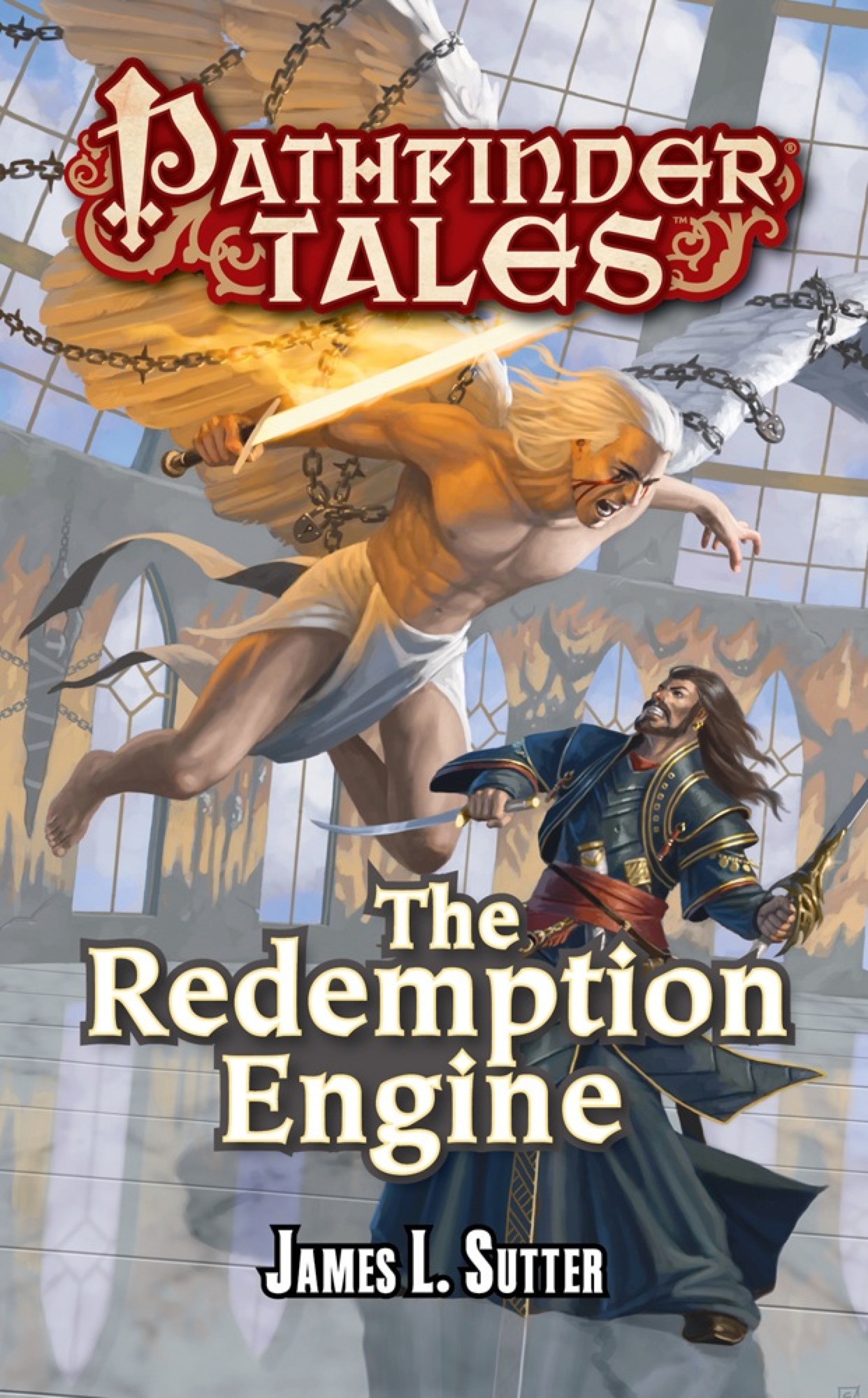
Finally, it's time for the last official event of the Con: the Pathfinder Tales panel. I have mixed feelings about RPG tie-in fiction. On the one hand, you can get novels like James Sutter's The Redemption Engine that tell a story but within a framework of a rule-based system that players can expect. This is the way that tie-in fiction should be done. But, there are other works like Ed Greenwood's The Wizard's Mask that read as if someone took a few RPG play sessions and tried turning them into a novel. If wanted to do that, I'd just go re-read my notes from previous play sessions of my own. But, because tie-in fiction can be so good (Elaine Cunningham's Elfsong and Elfshadow remain two of my favorite fantasy novels), I wanted to catch the panel.
Walking in I also got a free copy of Monster Hunter (unaffiliated to the panel. Someone had just been giving them away at another event and had extras he didn't want to fly back with) and a free Mountain Dew. So, score one for deciding to hit up the seminar! It was interesting to hear about how the Pathfinder Tales process differs radically from the rest of Paizo's printed product offerings.
 But, I also really enjoyed when James Sutter told a story about his and Wes Schneider's working relationship. Apparently when they started they did a lot of team writing. Then, as happens with so many teams, they had some creative differences that "almost turned into a fistfight in the Paizo parking lot." Of course, like all good friends with creative differences, everything was fine again after they had the freedom to go their own way and the two frequently consult each other again on their work. But the gossip point was in relation to the fight. Per Sutter, "I'd like to think that if it had come to blows, I could have taken him."
The seminar ended and with it, so did GenCon. I don't have a flight back until tomorrow afternoon, so I catch a couple of movies Sunday evening, do some adventure design on Monday morning and then fly back home.
I have already booked a closer hotel for next year's Con.

I catch the end of the Secrets of Golarion panel and then kill a little bit of time before catching the Developing Pathfinder panel. Again I ask, why aren't more people at these panels? Sure, they are recorded (thanks Know Direction), but the opportunity to interact directly with the people that design your game is not something to be missed. At the dais are Wesley Schneider, Patrick Renie, Mark Moreland, and a developer from the setting-neutral RPG line whose name I didn't quite catch (sorry!). These are the people that make the big decisions about Paizo, manage the Player Companion line, and manage the Campaign Setting line. If you want an opportunity to ask for things you are interested in, this is not something to miss out upon!
You can just watch the panel on Know Direction. I did make two suggestions. First was an idea for a Campaign Setting book about Travel and Trade in the Inner Sea. This would be less of a "what products are produced where" book and more of a "while people are living on the road in caravans and merchant trains, what is going on" kind of book. I'd like to cover things like typical types (maybe a few model NPCs) that you'd meet on the road, fun travelers' inns and caravanserai, etc. Unfortunately, the developers didn't think that there's much of a market for this. I might have had too much Gentlemen of the Road on my mind at the time anyway.
My suggestion for a short (3-5 pages MAX) introduction to Golarion document was much better received both by the Paizo staff and the others in the room. It's very inconvenient to tell someone that they are going to need to learn their way around the 7,459,848 page Core Rulebook and then follow that up with another 250+ pages about the setting in the Inner Sea World Guide. When Wes Schneider asked for a show of hands about who would be interested, every hand in the room went up. Apparently, something like this was developed for the Strategy Guide, but was cut for space reasons. So, I'm hopeful that it will get published. Wes mused about doing it as a Paizo blog teaser to drum up interest in the Strategy Guide.
Another attendee (aka the Know Direction cameraman!) suggested a book that I would LOVE, LOVE, LOVE to see! The suggested title was Ultimate Adventure and it would cover interesting ways to develop and manage all the non-combat but still crunchy things that Pathfinder features. Such a book would cover things like traps, long-distance travel, and alternate skills systems. Huge hat tip to you, sir! This is a great idea and I'd love to see it.
After the panel ended, I headed across the street for some lunch. There was a macaroni food truck. They have a mac and cheese dish that is covered in pickles (and that I subsequently covered in barbeque sauce). Let me be clear. This was heaven. I would eat this dish every day for the rest of my life and be so fat and happy doing so.
Finally, it's time for the last official event of the Con: the Pathfinder Tales panel. I have mixed feelings about RPG tie-in fiction. On the one hand, you can get novels like James Sutter's The Redemption Engine that tell a story but within a framework of a rule-based system that players can expect. This is the way that tie-in fiction should be done. But, there are other works like Ed Greenwood's The Wizard's Mask that read as if someone took a few RPG play sessions and tried turning them into a novel. If wanted to do that, I'd just go re-read my notes from previous play sessions of my own. But, because tie-in fiction can be so good (Elaine Cunningham's Elfsong and Elfshadow remain two of my favorite fantasy novels), I wanted to catch the panel.
Walking in I also got a free copy of Monster Hunter (unaffiliated to the panel. Someone had just been giving them away at another event and had extras he didn't want to fly back with) and a free Mountain Dew. So, score one for deciding to hit up the seminar! It was interesting to hear about how the Pathfinder Tales process differs radically from the rest of Paizo's printed product offerings.
But, I also really enjoyed when James Sutter told a story about his and Wes Schneider's working relationship. Apparently when they started they did a lot of team writing. Then, as happens with so many teams, they had some creative differences that "almost turned into a fistfight in the Paizo parking lot." Of course, like all good friends with creative differences, everything was fine again after they had the freedom to go their own way and the two frequently consult each other again on their work. But the gossip point was in relation to the fight. Per Sutter, "I'd like to think that if it had come to blows, I could have taken him."The seminar ended and with it, so did GenCon. I don't have a flight back until tomorrow afternoon, so I catch a couple of movies Sunday evening, do some adventure design on Monday morning and then fly back home.
I have already booked a closer hotel for next year's Con.